

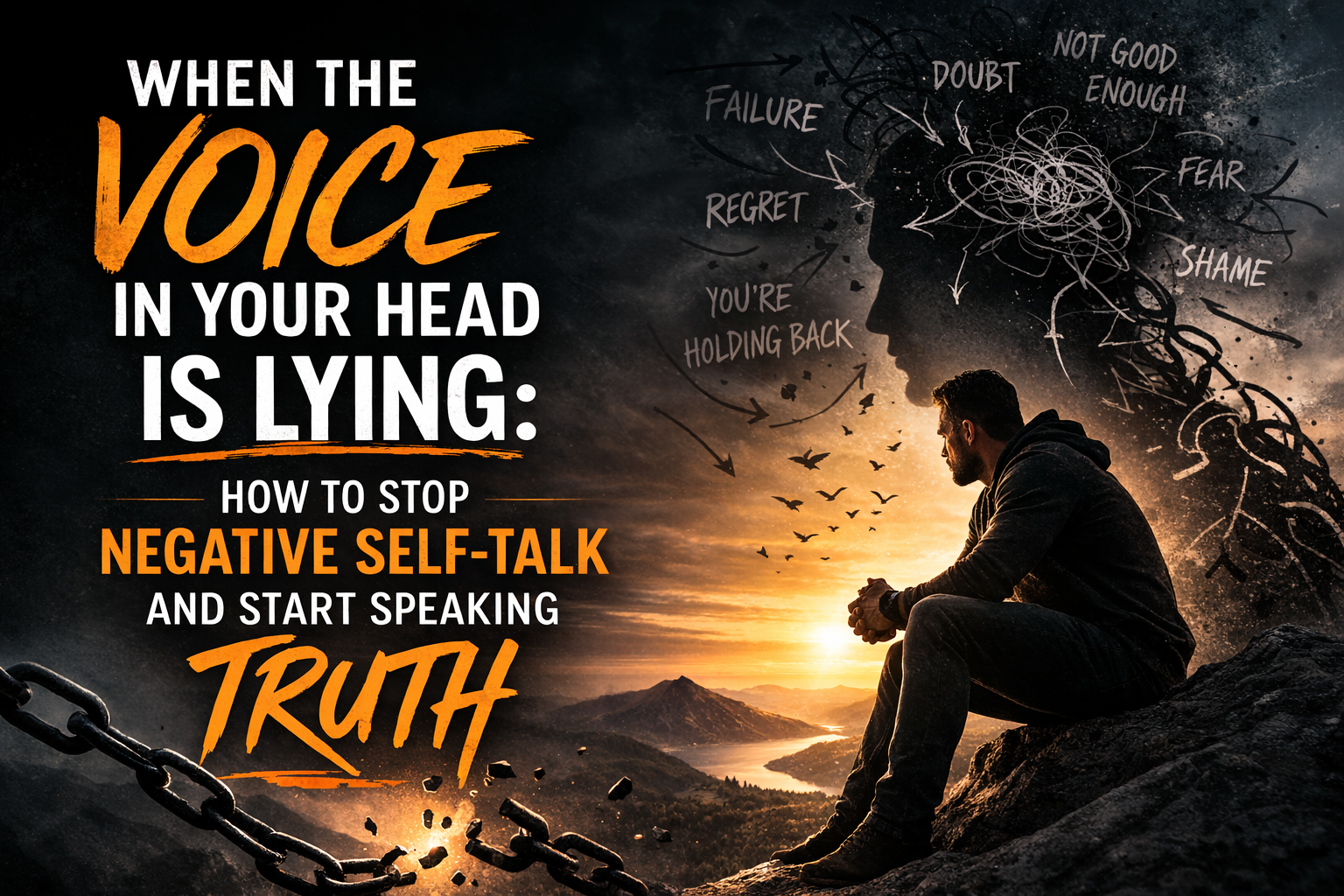
“Are you stupid?”
For many people, a question like that quietly appears in the mind during moments of pressure, mistakes, or uncertainty.
The word stupid means:
“Having or showing a great lack of intelligence or common sense.”
But when that definition is examined honestly, most people quickly realize something important.
They may not be the smartest person in the room — but they certainly do not lack intelligence or common sense.
Yet the voice continues.
And this is where the real problem begins.
Many people unknowingly spend years speaking lies over their own lives.
Examples sound like this:
-
“I’m stupid.”
-
“I’m not good enough.”
-
“I’ll never succeed.”
-
“Nobody cares about me.”
Over time these statements stop feeling like opinions.
They begin to feel like truth.
When that happens, the mind and emotions respond as if the accusations are real. The emotional pain can feel just as strong as if they actually were.
But the first step toward freedom is simple:
Recognize the lie.
Is It Your Conscience or Your Inner Critic?
When people begin noticing this internal conversation, they often assume it is simply their conscience speaking.
A conscience can be defined as an inner voice that guides a person toward right and wrong behavior.
But there is a clear difference between conscience and destructive self-talk.
Destructive inner criticism:
-
attacks identity
-
focuses on failures
-
exaggerates weaknesses
-
creates shame and inadequacy
-
erodes confidence and self-worth
It tears a person down.
A healthy conscience does something different.
It corrects — but in a way that encourages growth and strength. Even when the message is challenging, the tone builds a person up rather than destroying them.
One helpful question is this:
Is this voice tearing me down, or building me up?
Learning to recognize the difference is a powerful life skill.
Step One: Call Out the Lie
When negative self-talk appears, the first step is simply acknowledging it.
Instead of accepting it, call it out.
“I just called myself stupid. That isn’t true.”
This small moment of awareness is actually a major breakthrough.
But there is a second step that brings real change.
The lie must be replaced with truth.
Replace the Lie With Truth
Here are examples of how destructive inner dialogue can be challenged and reframed.
“You’re so stupid.”
→ I am intelligent.
→ I have common sense.
→ I am capable of learning and growing.
“You’re ugly.”
→ I have beauty and value.
→ There are good qualities about me.
“You’re not as good as those people.”
→ I am enough.
→ My goal is to improve from who I was yesterday.
“You’ll never be successful.”
→ I work hard.
→ I show up with integrity and effort.
“No one appreciates you.”
→ I choose gratitude for the people around me.
“They don’t care about you.”
→ I am loved.
→ My value is not dependent on recognition.
“You’re such a failure.”
→ Failure only happens when someone stops trying.
→ Effort today still matters.
“You can’t do anything right.”
→ I am capable.
→ I am learning.
→ I am enough.
Why This Feels Uncomfortable at First
Replacing negative self-talk with truth can feel strange in the beginning.
Many people even feel dishonest saying positive things about themselves.
But the discomfort usually comes from a deeper reality:
The mind has simply been conditioned to believe the negative story for so long that anything different feels unfamiliar.
Once a person begins honestly examining their life, they often discover something surprising.
The harsh inner voice has often been far more critical than reality deserves.
The Voice Often Returns During Fear
Even after someone begins challenging negative self-talk, the voice does not always disappear completely.
It often returns during moments of fear.
When someone steps outside their comfort zone…
When they try something new…
When uncertainty appears…
The old accusations can quickly resurface.
This is exactly when a different voice is needed most — a voice of:
-
encouragement
-
strength
-
wisdom
-
truth
These moments are opportunities to pause and ask a powerful question:
“What is this experience trying to teach me?”
Take Back Control of the Voice in Your Head
Learning to challenge negative self-talk is a skill that develops over time.
But it begins with a simple choice.
Every day, a person can listen to the voice that tears them down…
or the voice that helps them grow.
The direction of a life is often determined by which voice is believed.
Your future is being shaped by the actions you take today.
Choose growth — even when the journey is difficult.
If negative self-talk has been holding you back, you are not alone.
These kinds of mental battles are exactly what we work through in Coaching Life Change.
If you are ready to challenge the lies and start building a life of clarity and purpose, learn more at CoachingLifeChange.com.